If you spend any time online, you’ve probably seen the claim:
“Big investors are buying up all the homes.”
For buyers who’ve lost out on multiple offers, that idea can feel very real. When prices are high and competition is tough, it’s easy to assume massive companies are quietly snapping up everything available.
But when you look beyond the headlines and into the actual data, a much clearer and calmer picture emerges.
What the Numbers Actually Show
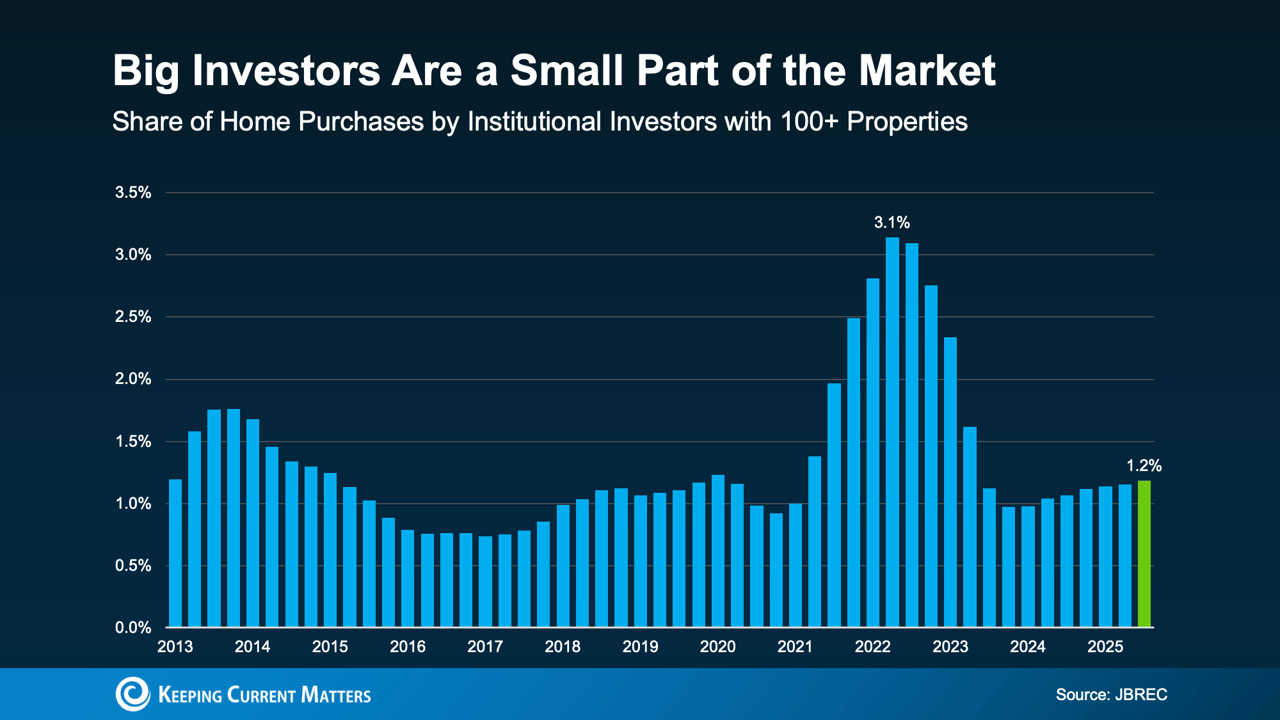
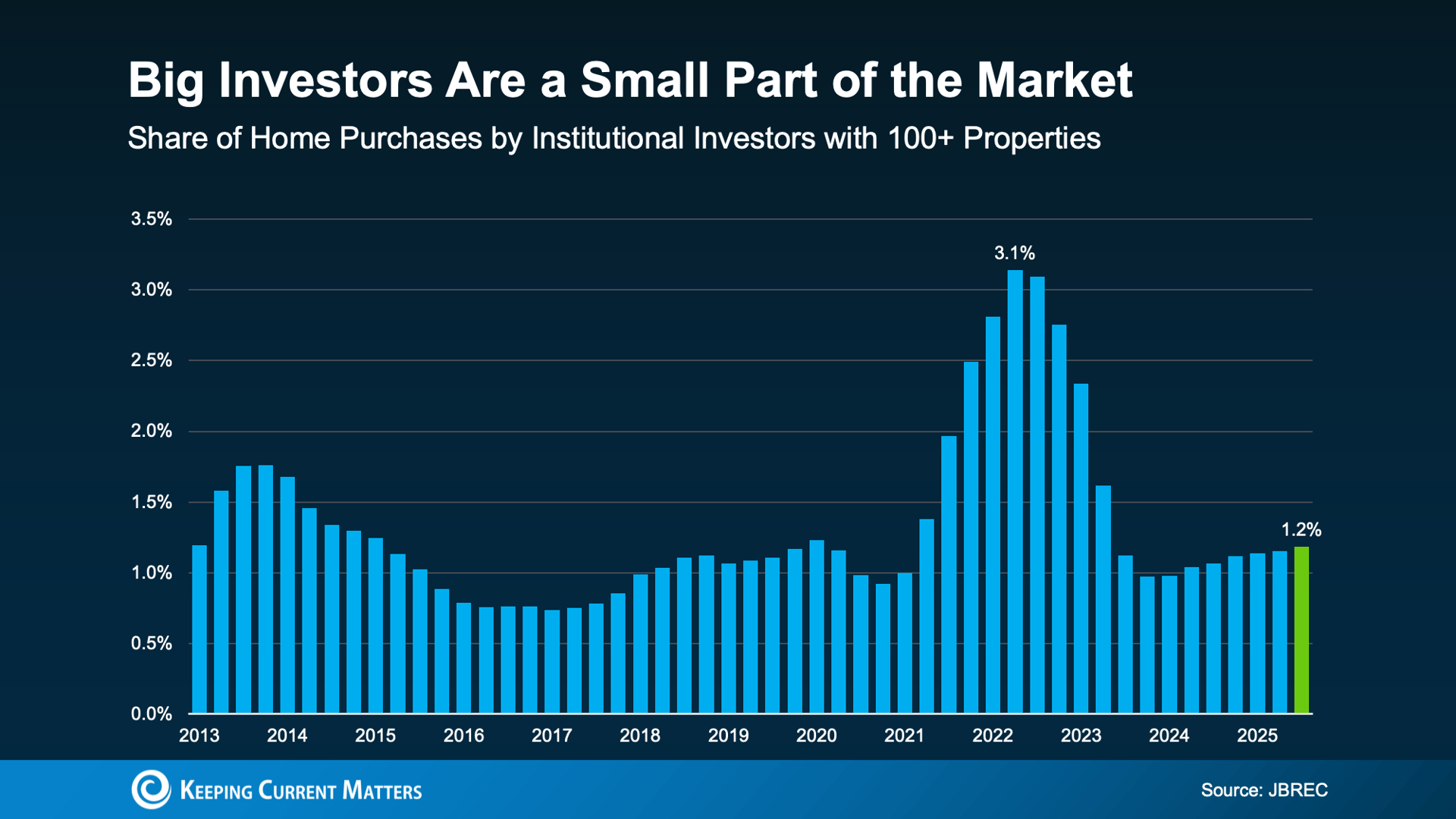
According to John Burns Research & Consulting, large institutional investors — defined as companies that own 100 or more homes — accounted for just 1.2% of all home purchases in the third quarter of 2025.
That means out of every 100 homes sold nationwide, only about one was purchased by a large institutional investor.
Even more important, that level of activity is not unusual. In fact, it’s well below the recent high point of 3.1% in 2022, which itself was still a relatively small share of the overall housing market. Historically speaking, today’s numbers are very much within normal ranges.
So while it may feel like large investors are everywhere, nationally they represent only a small fraction of total homebuyers.
Why This Topic Gets So Much Attention
There are two main reasons this narrative has gained so much traction.
Investor activity isn’t evenly distributed.
While large investors make up a tiny share of purchases nationally, they tend to concentrate in specific regions. In those pockets, competition can feel more intense, which understandably shapes local perception. On a broader scale, however, their footprint remains limited.
The term “investor” gets used too loosely.
Many headlines lump large Wall Street institutions together with small, local investors — such as individuals who own one or two rental properties. These are very different types of buyers. When they’re grouped into a single category, the numbers can sound much larger than the reality of large corporate ownership.
The truth is that most investor purchases come from small, local owners, not massive corporations.
What’s Really Driving Affordability Challenges
The biggest pressures on today’s housing market aren’t coming from institutional investors. They stem from long-term supply shortages, years of underbuilding, population growth, and ongoing demand.
Those factors have far more influence on pricing and competition than large investors ever have.
Understanding that distinction matters, especially for buyers and sellers trying to make informed decisions rather than reacting to headlines.
Bottom Line
Yes, large investors exist. Yes, they buy homes. But no, they are not buying up everything.
If you’re curious about what investor activity actually looks like in our local market and how it may or may not affect your options, having a clear conversation with a knowledgeable local agent can make all the difference.
A little context goes a long way — and informed decisions always start with the facts.

Annie & Kevin Rocks | Rocks Realty
Annie: 727-777-3264
Kevin: 727-389-6453