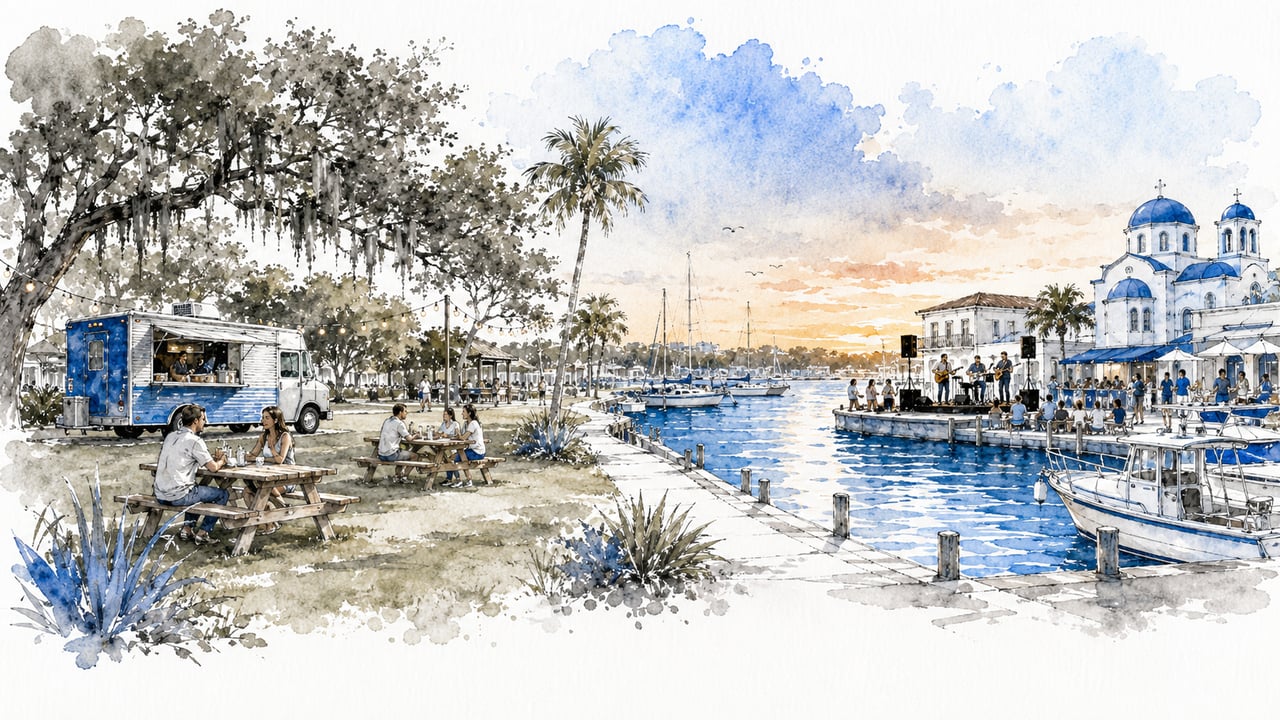
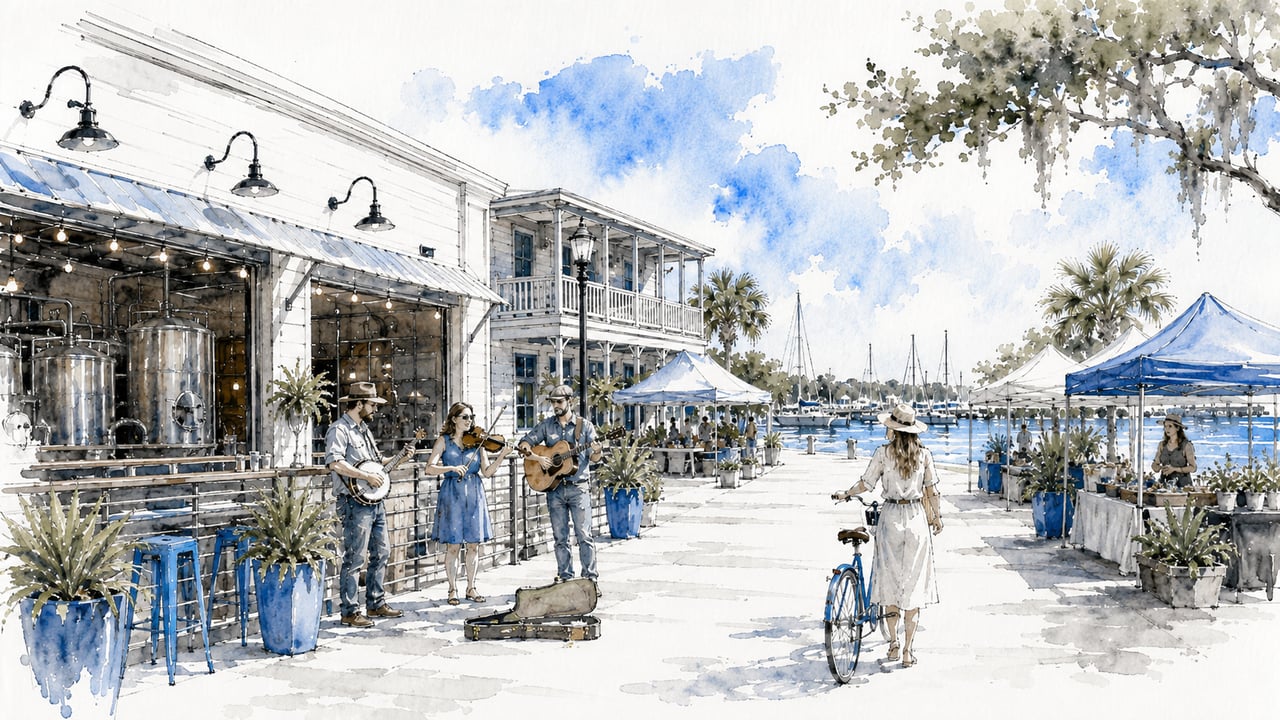
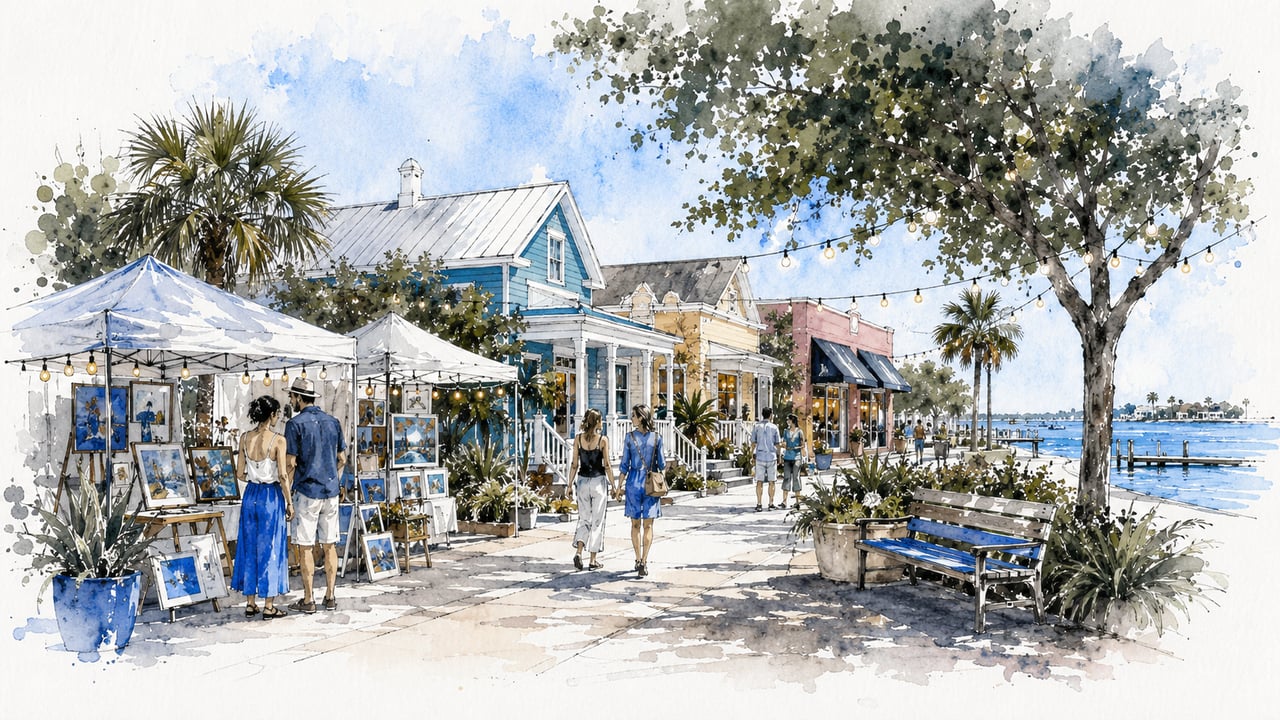
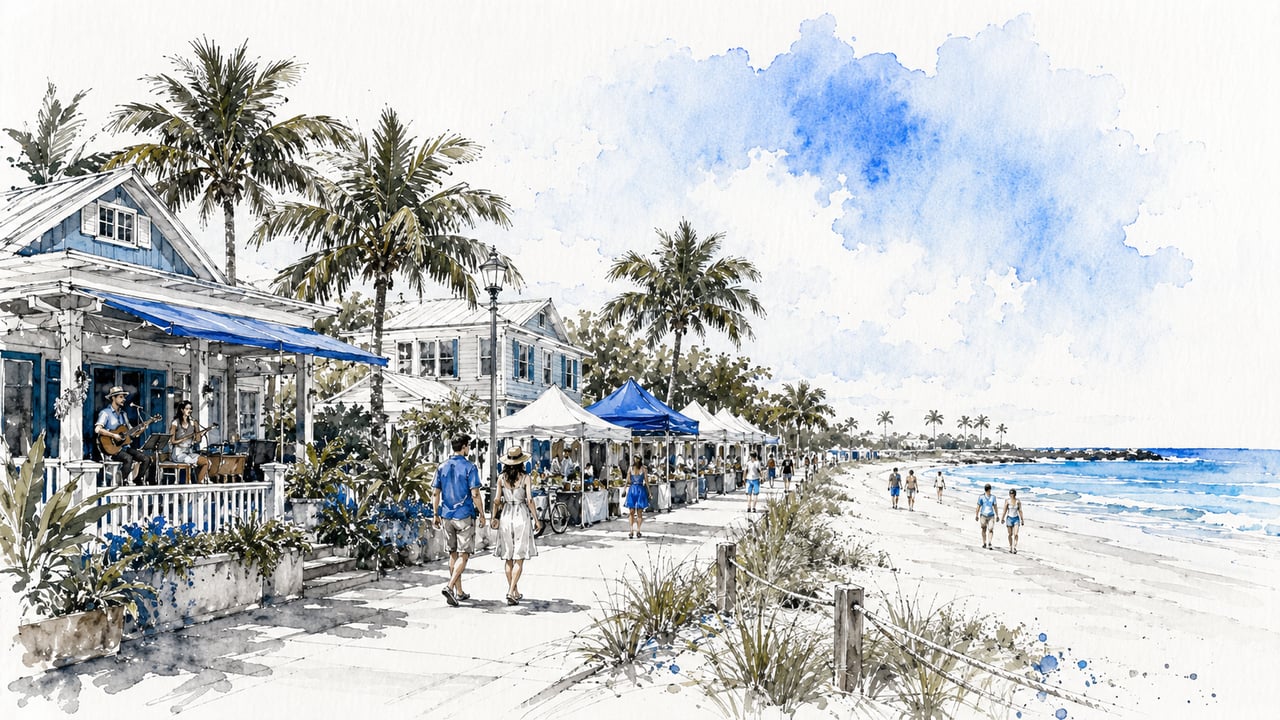
Living in Dunedin, FL means a walkable Main Street, a paved trail that runs right through downtown, and a state park beach at the end of the causeway. The city sits on the Gulf side of Pinellas County between Clearwater and Palm Harbor, with about 35,000 residents and a small town feel that has held up even as the rest of the county has grown. Homes sold for a median of about $440,000 in July 2026.
Dunedin is about 19 miles from Tampa International Airport, which is usually a 30 minute drive. Downtown St. Petersburg is about 20 miles south, and Clearwater Beach is a ten to fifteen minute drive down Edgewater Drive.
We are grateful to help families settle in Dunedin every year, and this guide covers what daily life here looks like: the neighborhoods, the trail, the breweries, the beaches, the marina, what homes cost, and what is changing downtown in 2026.
Where Is Dunedin and What Is It Like?
Dunedin covers about 10 square miles of land along St. Joseph Sound, with another 12 square miles of water inside the city limits. The name is Gaelic for Edinburgh, and the Scottish roots are not just a story. The city's sister city is Stirling, Scotland, and a pipe band marches down Main Street every spring during the Highland Games.
The layout is simple. Alternate US 19 runs north and south through the middle of town. West of it is the old grid of streets that leads to the water. East of it are the newer subdivisions and the Curlew Road corridor. Main Street runs west from the Pinellas Trail to the marina and Edgewater Drive, and that quarter mile is the heart of the city.
About 71 percent of homes are owner occupied, which is high for a coastal town. Most of the older neighborhoods have no homeowners association. That is one of the first things people notice when they compare Dunedin to newer communities up the coast.
Which Neighborhood Fits Your Life?
Dunedin has a neighborhood for almost every budget, and the price usually tracks two things: distance to the water and elevation above it. Here is how the main areas compare.
Area | What it looks like | Typical price range |
|---|---|---|
Downtown Dunedin | 1920s to 1940s cottages, modern infill, condos, walk to everything | $450,000 to $900,000 and up |
Dunedin Isles | Waterfront and near waterfront ranches along the Sound, next to Hammock Park | $500,000 to $650,000 inland; $800,000 to $2 million and up on the water |
Fairway Estates | Post war ranches wrapped around the Dunedin Golf Club, higher ground | $450,000 to $650,000 |
Highland Woods and Grove Terrace | Inland, tree lined, sidewalks, larger lots, higher elevation | Mid $400,000s to $800,000 and up |
South Dunedin and Harbor View | Mid century homes toward Clearwater, some newer builds and condos | $350,000 to $500,000 inland, more on the water |
Causeway and Bayshore Boulevard | Gulf front and Sound front condos and estates on the road to Honeymoon Island | Condos $260,000 to $650,000; homes $800,000 to $4 million and up |
These ranges come from recent listings and sales and will shift month to month. Two bedroom mid century homes on the west side still show up under $250,000 from time to time, and a one bedroom condo near Main Street can be found near $100,000. On the other end, a waterfront estate on Bayshore Boulevard can pass $4 million.
Downtown Dunedin
This is the walkable core. Bungalows from the 1920s sit a few blocks from new townhomes, and the Walk Score is in the 80s. Recent downtown sales have run near $700,000 with a high price per square foot, because the lots are small and the location does the work. Some blocks west of the trail sit in a flood zone, so an elevation certificate is worth pulling on any downtown home you like.
Dunedin Isles
This is the city's best known waterfront neighborhood. It runs along St. Joseph Sound next to Hammock Park, with homes from the 1940s through the 1990s. The water side carries real flood exposure, and insurance underwriting matters here more than anywhere else in the city.
Fairway Estates and the inland ridge
Fairway Estates wraps around the golf course and sits on higher ground. Highland Woods, Grove Terrace, Ranchwood Estates, and the Wilshire area share that advantage. These are the neighborhoods people choose when they want Dunedin without the flood premium, and they tend to hold value for that reason.
What Does a Normal Week Look Like?
Most weeks in Dunedin involve the trail, Main Street, and the water, in some order. The Pinellas Trail is a 37 mile paved path built on the old Orange Belt Railway, and it cuts straight through downtown near mile 25. People bike to breakfast, walk to the brewery, and ride to Honeymoon Island on a Saturday morning.
The trail and the golf carts
Golf carts are allowed on city streets posted at 30 miles per hour or less, which covers most of the residential grid. They are not allowed on the trail or on sidewalks, and they can only cross the state and county roads at signed crossings. The city no longer requires a registration sticker for standard carts, so there is no city fee. You will see them parked outside the market on Saturday morning and outside the ballpark in February.
The breweries
Dunedin has eight breweries inside the city limits, and seven of them are downtown within a short walk of each other. Dunedin Brewery on Douglas Avenue opened in 1995 and is the oldest craft brewery in Florida. Woodwright Brewing, 7venth Sun, Caledonia Brewing, Cueni Brewing, HOB Brewing, and Soggy Bottom Brewing fill in the rest of the downtown map, and Beach Island Brewery sits up on Bayshore Boulevard. A brewery walk is the standard way to show a visiting friend around.
The market and the ballpark
The Dunedin Downtown Market runs at Pioneer Park on Main Street. From November through June it runs Friday and Saturday from nine to two. From July through October it moves to the History Museum lot on Saturdays from nine to one. Produce, eggs, cheese, honey, baked goods, and live music are the standing lineup.
The Toronto Blue Jays have trained in Dunedin since 1977, and the Single A Dunedin Blue Jays play at TD Ballpark through the summer. Spring training opens in February with a free welcome event and a golf cart parade through downtown. It is one of the few places in Florida where major league baseball sits inside a walkable small town.
The parks and the pool
Edgewater Park sits at the foot of Main Street beside the marina and is the city's sunset spot. Weaver Park on Bayshore Boulevard has a fishing pier, a nature playground, and trail access. Highlander Park has a 25 yard pool with diving boards, a kids pool, and a sprayground, open June through September at three dollars a person or twenty five dollars for a ten visit family pass.
The golf course
The Dunedin Golf Club is a city owned Donald Ross course from 1927 that was once the national headquarters of the PGA of America. A six million dollar restoration finished in 2025 and uncovered original Ross greens that had been buried for about 75 years. Public green fees run $85 to $140 for eighteen holes, with resident discounts.
How Do You Get to the Beach?
Honeymoon Island State Park is at the end of the Dunedin Causeway, and Caladesi Island is a ferry ride beyond it. Together they are the reason many people choose Dunedin over the busier beach towns to the south.
- Honeymoon Island: eight dollars per vehicle, open eight in the morning to sunset every day, more than four miles of beach, a three mile nature trail through old slash pines, and a pet friendly section of beach.
- Caladesi Island: reached by the ferry from Honeymoon Island at twenty dollars for adults and ten dollars for children six to twelve, or by private boat for six dollars per boat. The ferry came back in 2025 about ten months after the 2024 storms.
- Clearwater Beach: a ten to fifteen minute drive south on Edgewater Drive, or a ride on the Jolley Trolley.
- The Dunedin Causeway itself: a free stretch of sand and shallow water where people launch kayaks and paddleboards and park along the road.
The Jolley Trolley coastal route links downtown Dunedin with Clearwater, Palm Harbor, and the Tarpon Springs Sponge Docks seven days a week. It is the easy way to do a brewery afternoon without moving the car.
What About Boats and the Marina?
The city owned Dunedin Marina has 192 slips, and it is in the middle of a $10.8 million rebuild after the 2024 storms. Resident monthly slip rates run from about $263 for a 25 foot slip to about $610 for a 60 foot slip, with a seven percent increase taking effect October 1, 2026. Non residents pay double when there is no wait list.
The dock stabilization and utility work is done. The east seawall was scheduled for summer 2026, the new fishing pier and a permanent Clearwater Ferry dock are targeted for late 2026, and the A and B docks will be replaced with floating docks in 2027. The marina has not taken slip renters since the storms, and the boat ramp access is still limited, so boat owners should ask about the current wait list before they buy.
Charter boats and the Olde Bay Cafe on the marina are open and busy. The water in front of Dunedin is St. Joseph Sound, which is protected by Honeymoon and Caladesi Islands, so it is calm sailing water most of the year.
What Do Homes Cost in 2026?
The median sale price in Dunedin was about $440,000 in July 2026, which was flat from a year earlier, with a median of 49 days on the market. The price per square foot rose about four percent to $313. About eight percent of homes sold above the asking price, and nearly half of the listings had at least one price cut, which tells you buyers have room to negotiate.
Different sources land in slightly different places. Zillow put the typical home value at about $413,000 at the end of August. Homes.com showed a trailing twelve month median sale of $416,000 with 3.9 months of supply. All of them agree on the shape: prices are steady, inventory is a little higher than last year, and homes take a bit longer to sell than they did in 2022.
Condos and townhomes
Condos are the affordable door into Dunedin. Nearly 90 were for sale in late August at a median list price of $225,000, with listings from about $90,000 to $750,000. Patrician Oaks and Royal Stewart Arms are 55 and over communities. Heather Lake and St. Andrews Links are the other names you will see most often. Condos here average about 100 days on the market, so there is time to be picky.
How Dunedin compares
Pinellas County as a whole had a single family median of $464,950 in August 2026 with 3.5 months of supply. Dunedin's single family homes tend to sit a little below the county median on price and a little above it on charm, which is a trade most buyers here are happy to make.
What Are the Costs of Living Here?
Dunedin's city millage is 4.1345, and it has not changed since 2016. The total millage for a Dunedin address was 17.6017 mills in 2025 once the county, transit, fire, and the other taxing districts are added. The city itself takes only about 23 percent of the bill.
On a $440,000 home with a homestead exemption, that works out to roughly $6,800 to $7,000 a year in property tax before the Save Our Homes cap starts to help. That is a planning number, not a quote. The property appraiser's site will run the exact figure for any address.
Flood zones and insurance
The city holds a Class 5 rating in the federal Community Rating System, which gives flood insurance policyholders a 25 percent discount. The waterfront strips along Dunedin Isles, Bayshore Boulevard, South Dunedin, and parts of downtown west of the trail sit in the AE and VE zones. The inland ridge neighborhoods are mostly in zone X. The city has a free online flood map that shows any address.
Private flood policies in Dunedin typically run $800 to $1,400 a year for elevated or zone X homes, and several times that on waterfront AE and VE lots. Homeowners insurance on the Gulf coast in 2026 generally runs $6,500 to $10,000 a year for $300,000 of dwelling coverage, with roof age and wind mitigation features moving that number a lot. We always recommend getting a real quote during the inspection period rather than guessing.
Two things to watch
- Amendment 3 in November 2026: the city commission voted in May to study a fire assessment fee to replace up to about $9 million in property tax revenue if the state amendment passes. No fee has been adopted yet.
- Water restrictions: the water management district extended Phase 3 restrictions through March 31, 2027, which limits lawn watering to four hours on assigned days.
What Is New in Dunedin in 2026?
Downtown Dunedin is getting its biggest project in decades. Main Street Exchange, on the old Ocean Optics site at Main Street and Douglas Avenue, won unanimous design approval in February 2026 after three years of planning. It will bring an 89 room boutique hotel, a 14,000 square foot food hall, a 280 seat theater, shops, and an off site parking garage, with an opening projected for October 2028. The city required the design to match the downtown look.
A few blocks away, the old City Hall site at 542 Main Street is becoming Grand Oak Park, a pocket park built around the big oaks. Phase one was under construction in early 2026. On Causeway Boulevard, a lot that sat empty since 2005 was re approved in April for twelve townhomes, a small hotel, and a winery.
The Dunedin Causeway bridges are getting $1.4 million in storm repairs through the end of 2026. The full replacement of the 1963 spans remains on hold with no construction date set. Weaver Park is also getting a living shoreline project.
Frequently Asked Questions
Is Dunedin a good place to live?
People who want a walkable downtown, a beach at the end of the road, and a small town calendar full of markets and festivals tend to love it. It is quieter than Clearwater and less expensive than the beach towns, with more character than most of the newer suburbs.
How much does a house cost in Dunedin?
The median sale price was about $440,000 in July 2026. Condos start near $100,000 and single family homes on the inland ridge mostly run $450,000 to $650,000. Waterfront homes run from about $800,000 to several million.
Does Dunedin have a beach?
Yes. Honeymoon Island State Park at the end of the causeway has more than four miles of beach for eight dollars per car, and the causeway itself has free sand and shallow water. Caladesi Island is a short ferry ride beyond.
Can you drive a golf cart in Dunedin?
Yes, on city streets posted at 30 miles per hour or less. Carts are not allowed on the Pinellas Trail or sidewalks, and they must cross the main roads at signed crossings. No city registration fee applies to standard carts.
How far is Dunedin from Tampa?
Tampa International Airport is about 19 miles away, usually 30 minutes. Downtown Tampa is a bit farther. Downtown St. Petersburg is about 20 miles south, which is 30 to 45 minutes depending on traffic.
Is Dunedin in a flood zone?
Parts of it are. The waterfront neighborhoods and some downtown blocks are in AE and VE zones, while the inland ridge is mostly zone X. The city's flood map shows every address, and the city's Class 5 rating gives policyholders a 25 percent discount on flood insurance.
Do Dunedin homes have HOA fees?
Most of the older neighborhoods do not. Condo communities and a few newer townhome projects have monthly dues. If you want the freedom of no association, Dunedin is one of the easiest places in Pinellas to find it.
Ready to Take the Next Step?
Living in Dunedin is about the small daily things: a bike ride on the trail, a sunset at Edgewater Park, a Saturday at the market, and a beach that never feels crowded. We are honored to help families find the right street here, whether that means a bungalow near Main Street, a ranch on the ridge, or a home on the Sound.
If you are thinking about a move to Dunedin, reach out to Rocks Realty. We would be glad to walk the neighborhoods with you, run the real numbers on taxes and insurance, and help you decide with confidence.