The best St. Petersburg neighborhoods for you depend on three things: whether you want to walk to downtown, how much waterfront risk you are comfortable with, and whether you prefer a 1920s bungalow, a mid century block home, or a new condo tower. This guide covers ten neighborhoods across the city with 2026 prices, what the streets feel like, and how each one handles water.
St. Petersburg is home to about 264,000 people. The county median for a single family home was $469,000 in July 2026, up almost 8 percent from a year earlier. Inside the city, prices run from the low $400,000s in the western neighborhoods to more than $1 million in Old Northeast and Snell Isle.
We are grateful to help buyers sort through these choices every week, and the honest truth is that most people fall in love with two or three neighborhoods and then decide on the details. Here are the details.
How Is St. Petersburg Laid Out?
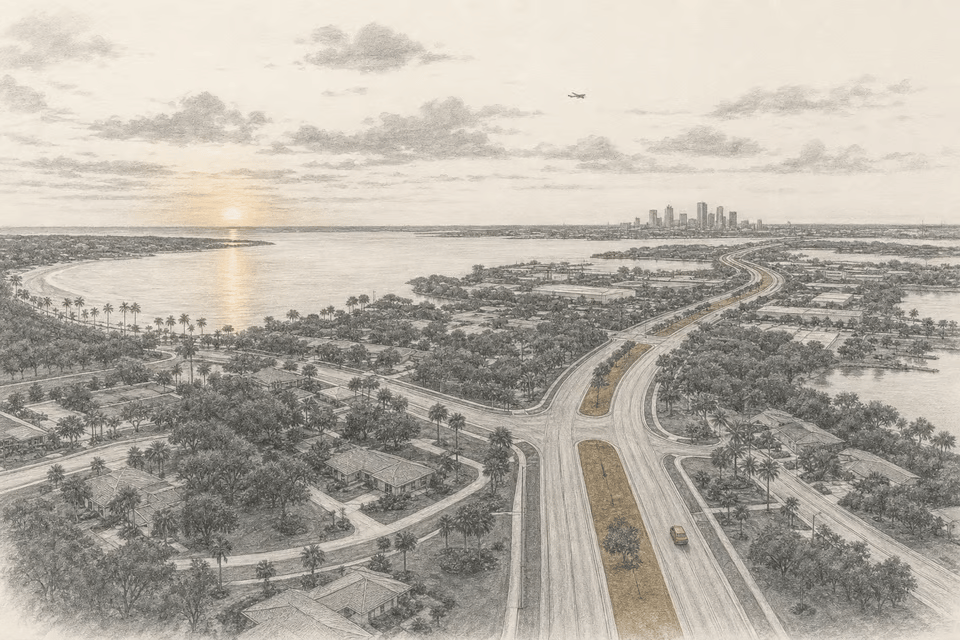
Downtown sits on the Tampa Bay waterfront, and the neighborhoods fan out from it in rings. Central Avenue runs west from the Pier for more than five miles, and it is the spine of the city. The SunRunner rapid bus follows it from downtown to St. Pete Beach in about 35 minutes for $2.25.
The city groups the Central Avenue corridor into districts. The EDGE District runs from Dr. Martin Luther King Jr. Street to 16th Street. The Grand Central District runs from 16th Street to 31st Street. The Warehouse Arts District sits south of Central between 16th and 31st with more than 200 artist studios.
North of Central, the historic neighborhoods have brick streets and bungalows. East of 4th Street, the land runs to the bay and the waterfront neighborhoods. West toward the beaches, the homes are mostly mid century ranches under old oaks. Here is how the ten neighborhoods compare at a glance.
Neighborhood | Housing style | Typical 2026 price | Walk to downtown | Flood risk |
|---|---|---|---|---|
Downtown and Beach Drive | Condo towers, townhomes | $280,000 to $1.2 million resale condos | You are there | Low on the bluff, higher near Bayboro |
Old Northeast | 1911 to 1940 bungalows and Mediterranean | $525,000 to $1.5 million, median near $1.1 million | Yes | Low inland, higher on the bayfront tier |
Snell Isle | 1920s estates and new rebuilds | High $800,000s to several million | 5 to 10 minute drive | High, most lots in a flood zone |
Crescent Lake and Crescent Heights | 1920s to 1950s bungalows and ranches | Mid $400,000s to high $700,000s | 10 minute bike | Mixed |
Historic Kenwood | 1910s to 1930s Craftsman bungalows | $390,000 to $1.2 million, median near $560,000 | 5 to 10 minute drive | Low |
Grand Central and EDGE | Bungalows, new townhomes, lofts | $400,000 to $800,000 | Yes, or SunRunner | Low to moderate |
Shore Acres | 1950s to 1970s block ranches, new elevated homes | High $400,000s to $1.7 million | 10 to 15 minute drive | Highest in the city |
Coquina Key | 1950s to 1970s ranches and canal homes, condos | Mid $300,000s to $1.1 million | 10 to 15 minute drive | High |
Old Southeast | 1920s to 1950s bungalows and cottages | Mid $400,000s to mid $800,000s | 2 to 3 mile bike | Mixed, block by block |
Jungle Prada and Jungle Terrace | Mid century ranches, bayfront rebuilds | $400,000 to $700,000, waterfront $1 million and up | 20 minute drive | Low inland, higher on Boca Ciega Bay |
Downtown and Beach Drive
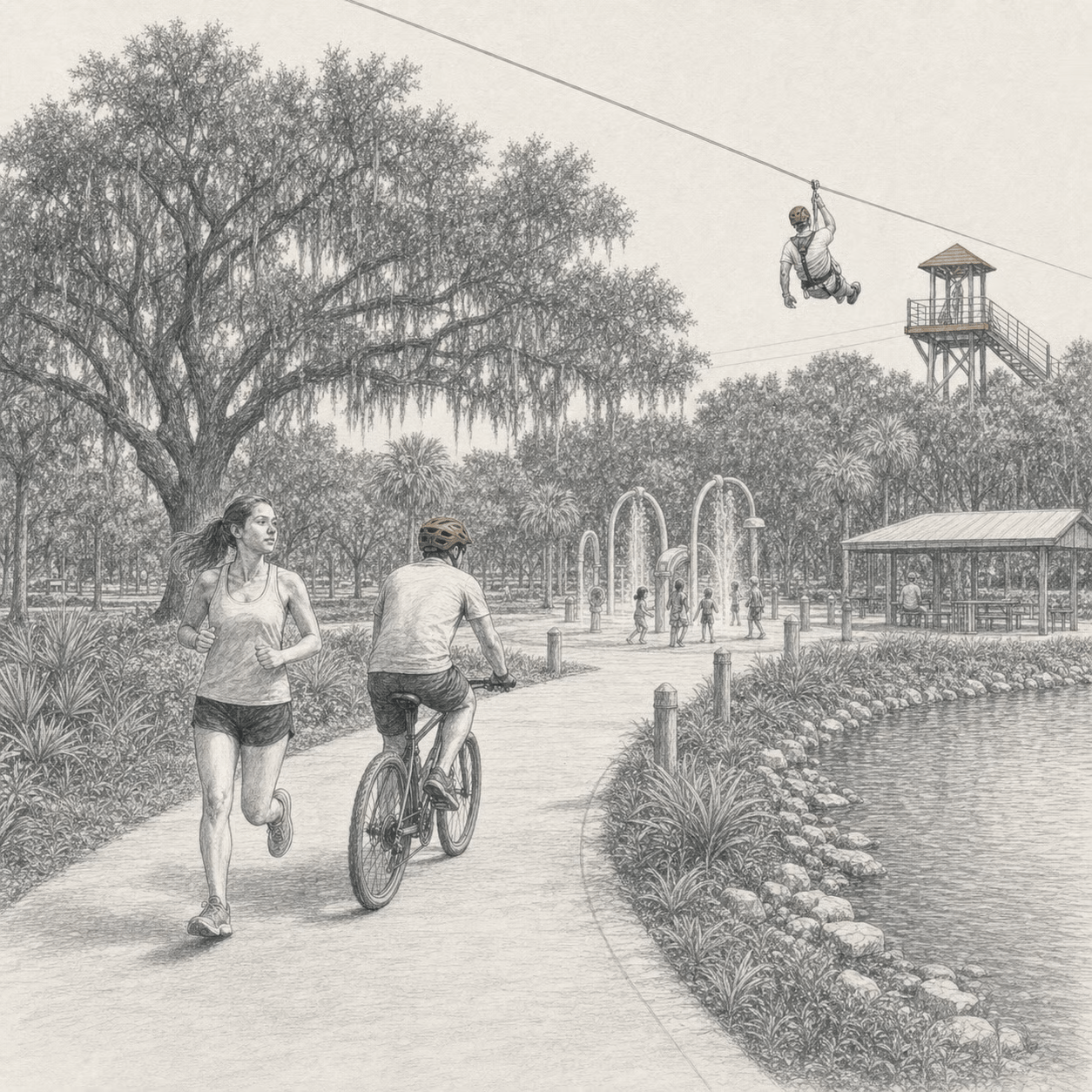
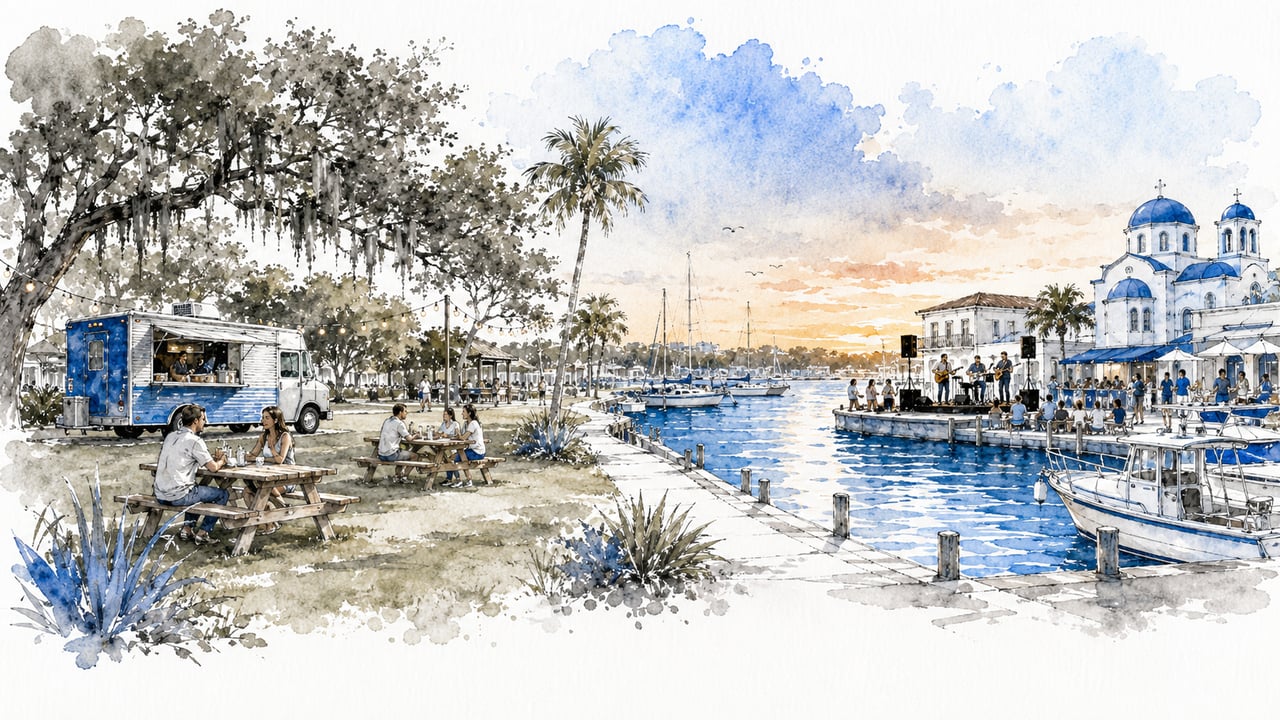
Downtown is almost entirely condos and townhomes, and it is the only part of the city where you can live without a car. The Pier opened in 2020 on 26 acres with a playground, a splash pad, restaurants, and the Tampa Bay Watch Discovery Center. Beach Drive has the Museum of Fine Arts, the Vinoy, and the waterfront parks. Central Avenue has the shops and bars.
The towers span fifty years. Bayfront Tower dates to the 1970s. Parkshore Plaza, Ovation, Signature Place, and 400 Beach Drive came in the 2000s. Saltaire finished in 2023, and 400 Central, now the tallest building in the city at 46 stories, began move ins this year. Art House on 1st Avenue South is nearly sold out. The Waldorf Astoria Residences on 2nd Avenue South has sold more than $200 million in units and is expected to break ground by the end of 2026.
What it costs
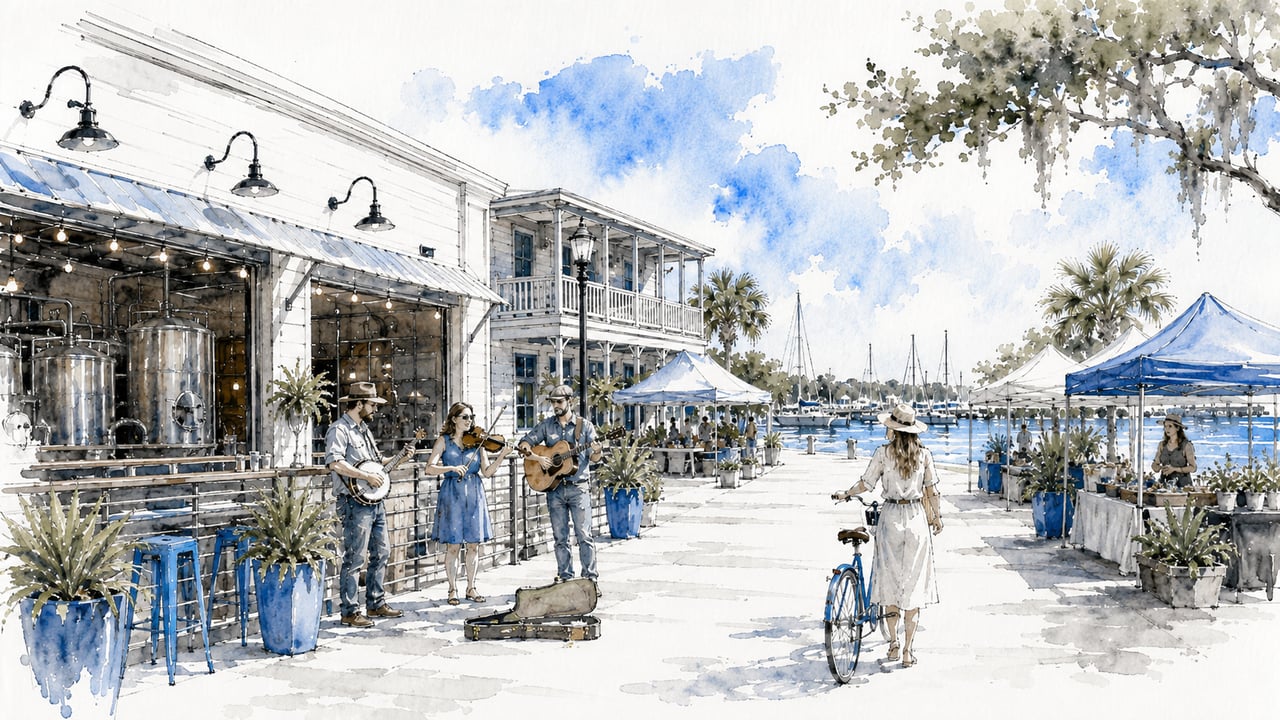
Resale condos downtown run about $280,000 to $420,000 for one bedroom, $420,000 to $650,000 for two, and $650,000 to $1.2 million for three. New tower units start well above that. The Saturday Morning Market returns to the Al Lang Stadium lot on October 3 and runs from 9 to 2 through May with more than 130 vendors, and living within a few blocks of it is a real part of the downtown appeal.
Old Northeast
Old Northeast is the city's largest collection of homes built before 1930, and it is the neighborhood most people picture when they think of St. Pete. The streets are brick with granite curbs. The homes are Craftsman bungalows, Mediterranean Revival, and Mission style on lots about 50 feet wide. It runs from 5th Avenue North to 30th Avenue North, and from 4th Street to the bay.
The median sale price was about $1.1 million in June 2026, up 13 percent from a year earlier, with homes going under contract in about 35 days. Smaller homes still trade from the mid $500,000s, and the large homes on the water go well past $1.5 million.
Living here
North Shore Park has a pool, tennis courts, and a beach on the bay. The path along Coffee Pot Bayou is the neighborhood's front porch, with dolphins and manatees most mornings. Beach Drive and downtown are a walk or a bike ride. The interior blocks sit higher than the bayfront tier along Coffee Pot Boulevard and Bayshore Drive, and most of the interior is outside the high risk flood zone.
Snell Isle
Snell Isle is a 1920s planned neighborhood on a peninsula north of downtown, built around the Vinoy Golf Club, with lots from a third of an acre to more than an acre. It has no commercial street at all, which is part of why buyers choose it. The homes are Mediterranean Revival estates and newer rebuilds.
Prices depend on the water. Interior homes trade from the high $800,000s. Canal lots run about $1.6 million to $3 million. Homes on Coffee Pot Bayou or open Tampa Bay run $3 million to $8 million, and the largest estates go beyond that. Nearly every lot on the island is in a mapped flood zone, so an elevation certificate and a flood quote are part of any offer here.
Snell Isle is a five to ten minute drive to Beach Drive. It is car dependent by design, and residents treat that as a feature.
Crescent Lake and Crescent Heights
Crescent Lake is built around a 50 acre park with a loop path, a dog park, tennis courts, and the ballfield where Babe Ruth once trained. The homes are 1920s Craftsman bungalows, Mediterranean cottages, and 1950s ranches on brick streets, less than a mile north of downtown.
Updated bungalows trade from the mid $400,000s into the $700,000s. Crescent Heights, just north and west, started as orange groves in the 1920s and has a similar feel with a slightly lower price. Both are a ten minute bike ride to downtown along 4th Street North. Lots near the lake can sit in a flood zone, while blocks a few streets away do not, so check the map lot by lot.
Historic Kenwood
Historic Kenwood is the largest contiguous bungalow district in Florida, with about 1,500 homes built mostly between 1910 and 1930. It runs from 5th to 9th Avenue North and from 16th to 26th Street North, directly north of the Grand Central District.
The median sale price was about $563,000 in June 2026. Smaller homes start near $390,000, and the fully restored bungalows reach $1 million or more. Kenwood is one of the drier core neighborhoods, with almost every block outside the high risk flood zone, and that has become a real advantage in the last two years.
Living here
The neighborhood hosts BungalowFest each year and monthly porch parties, and the Kenwood Artist Enclave has more than 30 working studios. Seminole Park anchors the middle. The breweries and restaurants of Grand Central are a short walk south, and the Pinellas Trail runs along the western edge.
Grand Central and the EDGE District
The Central Avenue corridor west of downtown is where St. Pete is changing fastest. Vintage bungalows sit beside new townhomes and apartments over shops. The Grand Central District is the city's LGBTQ hub with more than 150 welcoming small businesses, and the SunRunner runs the length of it.
Prices span a wide range. Older cottages trade from about $400,000. New townhomes run in the upper $700,000s. Condos in the EDGE, such as Ovation and Bliss, follow downtown pricing. Imagine Museum at 1901 Central, the Chihuly Collection at 720 Central, and Grand Central Brewhouse are the landmarks. If you want to walk to dinner without paying downtown tower prices, this is the corridor.
Shore Acres
Shore Acres is about 2,400 homes on filled land between Tampa Bay and Weedon Island Preserve, and it is the lowest lying neighborhood in the city. The homes are mostly 1950s to 1970s block ranches on lots under a fifth of an acre, with canals that lead to Coffee Pot Bayou.
Hurricane Idalia in 2023 damaged more than 1,400 homes here, and Helene in 2024 brought the worst surge the neighborhood has seen. Since then, the neighborhood has split into two markets. Elevated and rebuilt homes trade from about $800,000 to $1.7 million on the water. Original slab homes trade at a discount, and buyers plan on raising or rebuilding them. The median sale price rebounded to about $460,000 in June 2026, up more than 50 percent from the post storm low.
The canals are powerboat water. The bridges are fixed, so center consoles and low profile boats fit and larger cruisers do not. A $33 million pump station and stormwater project begins this fall, and a state program aims to lift more than 100 homes.
Coquina Key
Coquina Key is an island south of downtown, connected by bridge, with 1950s to 1970s ranch homes on canals that open straight to Tampa Bay. Boaters like it because there are no fixed bridges between the canals and open water.
The neighborhood median was about $270,000 in June 2026, but that number is weighted by Waterside at Coquina Key, a large condo community with deeded docks where units trade around $220,000. Single family homes off the water run from the mid $300,000s to the mid $400,000s. Canal front homes with lifts run from the mid $500,000s to more than $1.1 million. Nearly every lot is in a flood zone.
Coquina Key Park has waterfront paths and a playground. There is no shop or restaurant on the island, and downtown is a ten to fifteen minute drive up 4th Street South.
Old Southeast
Old Southeast runs south from downtown along the bay to about 30th Avenue South, with 1920s to 1950s bungalows and Spanish cottages a short bike ride from the Dali Museum and the USF St. Petersburg campus. Lassing Park on the bay has fishing, kayaking, and sunrise views, and the waterfront trail leads north into downtown.
Prices run from the mid $400,000s for a small original home to the low and mid $800,000s for a renovated bungalow, with the Lassing Park blocks above that. Flood zones change block by block here, so a home on one side of a street can be in Zone X and a home across from it in Zone AE. That makes the elevation certificate worth reading before the second showing.
Jungle Prada and Jungle Terrace
The Jungle neighborhoods on the west side of the city are where mid century ranches sit under the biggest oak canopy in St. Pete, about ten minutes from the beaches.
Jungle Prada has brick streets, a boat ramp and sunset park on Boca Ciega Bay, and a mix of ranches, bungalows, and large new homes on the water. Typical inland homes run in the high $600,000s. Bayfront homes run $1 million and up. Jungle Terrace, just south, is the more affordable of the two, with a median near $400,000 and 133 acre Walter Fuller Park with a pool, ballfields, and lake fishing. Jungle Terrace sits mostly outside the flood zones. Tampa is a 35 to 50 minute drive from here, and St. Pete Beach is ten minutes.
Which Neighborhood Fits You?
Here is the short version of how we help buyers narrow the list:
- Want to walk everywhere and skip yard work? Downtown or the EDGE District.
- Want a historic home and a walk to dinner? Old Northeast if the budget is above $700,000, Kenwood or Crescent Lake if it is below.
- Want a boat behind the house? Coquina Key for open bay access, Venetian Isles or Snell Isle for deeper budgets, Shore Acres for smaller boats and lower prices with an elevated home.
- Want the beach in ten minutes and a big yard? Jungle Prada or Jungle Terrace.
- Want privacy and no commercial street? Snell Isle.
Frequently Asked Questions
What is the most walkable neighborhood in St. Petersburg?
Downtown, followed by Old Northeast and the Central Avenue districts. Old Northeast has a walk score in the mid 60s and a bike score in the 80s, and Kenwood and Euclid St. Paul are close behind.
What is the median home price in St. Petersburg?
About $430,000 for all home types in August 2026, up about 7 percent from a year earlier. The Pinellas County single family median was $469,000 in July, and the condo median was $272,000.
Which St. Petersburg neighborhoods have the lowest flood risk?
Historic Kenwood, Euclid St. Paul, Allendale, Jungle Terrace, and the interior blocks of Old Northeast and Crescent Lake sit mostly in Zone X. Snell Isle, Shore Acres, Coquina Key, and Venetian Isles are almost entirely in mapped flood zones.
Where are the historic bungalow neighborhoods?
Historic Kenwood, Old Northeast, Crescent Lake, Euclid St. Paul, and Old Southeast. Kenwood is the largest bungalow district in Florida, and Old Northeast has the largest concentration of homes built before 1930.
How long is the commute from St. Pete to Tampa?
Plan on 25 to 45 minutes from downtown St. Pete to downtown Tampa on Interstate 275, and 25 to 30 minutes to Tampa International Airport. The new Howard Frankland Bridge span opened in March 2025 and carries about 250,000 vehicles a day.
What is the SunRunner?
It is a rapid bus line that runs 10 miles from downtown St. Pete to St. Pete Beach along Central Avenue and 1st Avenues, with 31 stations, every 15 minutes until 8 in the evening, for $2.25. The ride from the beach to downtown takes about 35 minutes.
Is Tierra Verde part of St. Petersburg?
No. Tierra Verde is unincorporated Pinellas County south of the city, reached by the Pinellas Bayway. It uses a St. Petersburg mailing address but is governed by the county.
Ready to Take the Next Step?
Every one of these neighborhoods has a version of the St. Pete life, and the right one is usually clear after a Saturday of driving them with someone who knows the streets. We are honored to be that someone. We will show you the blocks, pull the flood maps, and share the recent sales so you can decide with confidence.
If you are thinking about buying or selling in St. Petersburg, reach out to Rocks Realty. We are grateful to help, and we would be glad to start with a conversation about what matters most to you.