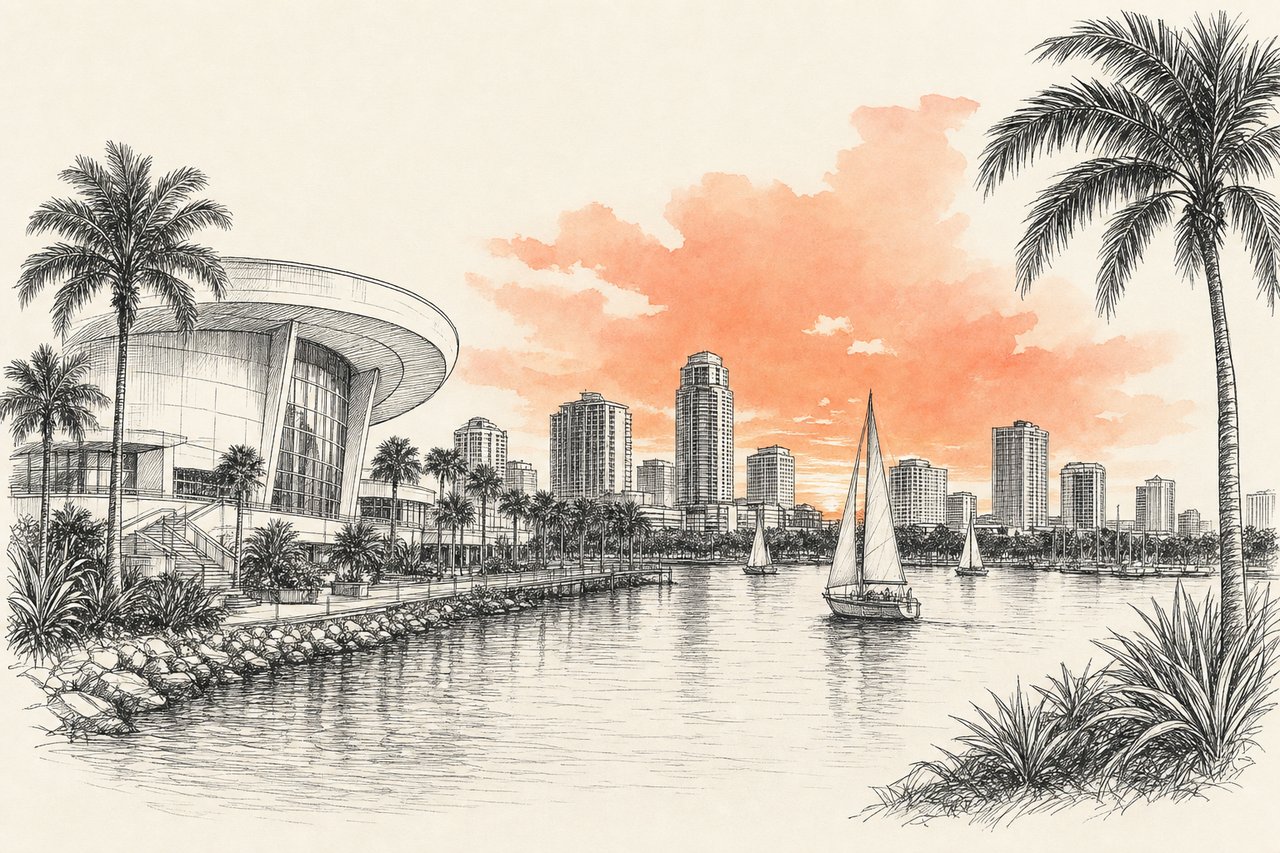
Buying a waterfront home in St. Petersburg is one of the most rewarding moves you can make in Tampa Bay—and one of the most misunderstood. The water views, deep-water dockage, and golden-hour skies are exactly why buyers fall in love with Snell Isle, Shore Acres, and the Old Northeast waterfront. But before you sign a contract, you need to understand how FEMA flood zones, elevation certificates, and insurance premiums will shape both your monthly carrying costs and your long-term resale value. This guide breaks down what every coastal buyer should know.
Why Flood Zones Matter More Than Almost Anything Else in St. Pete
In most inland markets, flood risk is an afterthought. On the St. Pete waterfront, it is a primary driver of price, insurability, and lifestyle. The city sits on a low-lying peninsula surrounded by Tampa Bay, Boca Ciega Bay, and the Gulf, which means elevation can change dramatically from one block to the next. A home three feet higher than its neighbor can carry a flood insurance premium that is thousands of dollars lower per year.
That is why savvy buyers treat the flood zone designation as a core part of due diligence rather than a formality buried in the closing paperwork. Understanding your zone before you make an offer lets you budget accurately, negotiate from a position of knowledge, and avoid the sticker shock that derails so many coastal contracts.
The FEMA Flood Zones You Will Encounter
FEMA divides land into flood zones based on the statistical probability of flooding. On the St. Pete waterfront, the designations you will most often see are:
- Zone AE — A high-risk Special Flood Hazard Area where flood insurance is required for any federally backed mortgage. AE zones come with a Base Flood Elevation (BFE), the height floodwaters are expected to reach in a base flood event. Much of Shore Acres and the lower-lying parts of Snell Isle fall into AE.
- Zone VE — A high-risk coastal zone subject to wave action on top of flooding. VE carries the highest premiums and the strictest building standards. It is less common in St. Pete than AE but appears on some direct-Gulf and open-bay parcels.
- Zone X (shaded and unshaded) — Moderate-to-low risk areas outside the Special Flood Hazard Area. Flood insurance is not federally required here, though lenders and prudent owners often still carry it. Higher-elevation pockets of the Old Northeast and parts of Snell Isle can fall into Zone X.
How Snell Isle, Shore Acres, and the Old Northeast Compare
Each of these signature waterfront neighborhoods carries a different flood and insurance profile, and that difference should shape where you focus your search.
Snell Isle
Snell Isle is one of St. Pete's most prestigious addresses, with grand estates and deep-water access off Coffee Pot Bayou. Elevations vary across the island, so two homes a few hundred feet apart can sit in different flood zones. Many waterfront parcels are in AE, but interior and elevated lots may be more favorable. Because home values here are high, the dollar impact of insurance and elevation is magnified—making an elevation certificate essential.
Shore Acres
Shore Acres offers some of the most attainable waterfront living in the city, which is a major part of its appeal. The trade-off is elevation: large portions of the neighborhood sit low and fall squarely in AE zones, and the area has historically experienced flooding during major storms. Buyers here should pay especially close attention to whether a home has been elevated, what the finished-floor elevation is relative to BFE, and whether recent renovations triggered substantial-improvement rules.
The Old Northeast Waterfront
The Old Northeast blends historic charm with waterfront frontage along Coffee Pot Bayou and North Shore. Elevations tend to be more variable, with some higher ground set back from the water. Historic homes add a wrinkle: older structures may not meet current elevation standards, and flood mitigation can be more complex when working within a historic district's design guidelines.
The Elevation Certificate: Your Most Important Document
An elevation certificate is a document prepared by a licensed surveyor that records a property's elevation relative to the Base Flood Elevation. It is the single most powerful tool you have for understanding—and often reducing—your flood insurance premium.
What an Elevation Certificate Tells You
The certificate documents the lowest finished floor elevation, the elevation of mechanical equipment, the flood zone, and the BFE. Insurers use this data to price your policy. A home built or elevated above the BFE can qualify for dramatically lower premiums, while a home below BFE may face some of the highest rates in the market.
Why Buyers Should Always Ask for One
If a seller already has an elevation certificate, request it early. If not, consider ordering one during your inspection period. The few hundred dollars it costs can reveal a difference of thousands of dollars per year in insurance—information that is invaluable both for budgeting and for negotiating.
What to Expect on Flood Insurance Costs
Flood insurance in coastal St. Pete is priced based on risk, and risk is driven by elevation, zone, construction type, and the federal pricing methodology now in use, often referred to as Risk Rating 2.0. Under this approach, premiums are tailored to each individual property rather than applied broadly across a zone, so two neighboring homes can pay very different amounts.
The Variables That Move Your Premium
- Finished-floor elevation relative to BFE — The biggest single factor. Higher is cheaper.
- Flood zone — VE costs more than AE, which costs more than X.
- Distance to water and flood source — Closer generally means higher premiums.
- Construction and foundation type — Elevated pilings, flood vents, and breakaway walls can lower costs.
- Prior claims history — A property with repeated losses may be more expensive to insure.
Don't Forget Windstorm Insurance
Flood and windstorm are two separate coverages, and on the coast you typically need both. Windstorm (or wind/hurricane) coverage protects against hurricane damage and often carries its own deductible expressed as a percentage of the dwelling value. Together, flood and wind coverage can represent a meaningful share of your annual ownership cost, so always price both before committing.
Smart Steps to Take Before You Make an Offer
A disciplined buyer treats flood and insurance due diligence as part of the offer process, not the closing process.
- Pull the FEMA flood map designation for the exact parcel, not just the neighborhood.
- Request the seller's elevation certificate and any prior flood insurance declarations pages.
- Get a current insurance quote—both flood and wind—before your inspection period ends.
- Ask about the home's claims history and any past flood mitigation work.
- Confirm whether renovations triggered substantial-improvement rules that require elevation upgrades.
- Work with an agent who specializes in waterfront and understands hyperlocal elevation patterns.
Frequently Asked Questions
Is flood insurance always required on a St. Pete waterfront home?
It is federally required if the home is in a high-risk zone (such as AE or VE) and you have a federally backed mortgage. In a moderate-to-low-risk Zone X, it is not legally required, but most coastal owners carry it anyway because flooding can and does occur outside high-risk zones.
How much does flood insurance cost on the St. Pete waterfront?
There is no single answer because Risk Rating 2.0 prices each property individually. Premiums can range from relatively modest for an elevated home in a favorable zone to several thousand dollars per year for a low-elevation home in AE or VE. The only reliable figure is a property-specific quote, which is why you should obtain one before your inspection period closes.
Can I lower my flood insurance premium after I buy?
Yes. Obtaining an elevation certificate, adding flood vents, elevating mechanical equipment, and in some cases physically elevating the structure can reduce premiums. Community-wide participation in FEMA's Community Rating System can also produce discounts for St. Pete homeowners.
Does being in a flood zone hurt resale value?
Flood zone status affects insurability and carrying cost, which buyers price into their offers—but waterfront demand in St. Pete remains strong. A well-elevated home with a favorable elevation certificate and a manageable insurance profile can be a significant competitive advantage at resale.
What is the difference between flood and windstorm insurance?
Flood insurance covers rising water and storm surge; windstorm insurance covers hurricane and wind damage. They are separate policies with separate deductibles, and on the coast you generally need both for full protection.
The Bottom Line for St. Pete Waterfront Buyers
Flood zones, elevation certificates, and insurance are not obstacles to waterfront ownership—they are the variables that separate a confident purchase from a costly surprise. By understanding how Snell Isle, Shore Acres, and the Old Northeast differ, ordering an elevation certificate, and pricing both flood and wind coverage before you make an offer, you put yourself in control of the deal. At Rocks Realty, we help buyers navigate the coastal nuances that generic agents miss—so you can buy your St. Pete waterfront home with clarity and confidence. Reach out today to start your search with a team that knows the water as well as the market.
Ready for a clearer plan?
If you are wondering whether now is the right time to buy in Tampa Bay, the best next step is a conversation grounded in real numbers and local perspective. Our team would be honored to help you evaluate your options with confidence.

Annie & Kevin Rocks | Rocks Realty
Annie: 727-777-3264
Kevin: 727-389-6453